What we’re discovering this summer
For more than 85 years, the Monadnock Garden Club has helped care for the Dora N. Spalding Trail, continuing a conservation mission that reaches back to the Club’s founding in 1925. Today, that stewardship includes a new effort to look more closely at the wildlife and natural communities that share this historic landscape.
Working with Access Conservation, wildlife cameras and field surveys are helping document what moves through the trail when no one is watching, as well as what can be discovered simply by slowing down and paying attention.

Explore Together. Discover
More
Who’s Passing Through?
Recent camera captures have offered an entertaining and sometimes surprising look at life along the trail. One Common Raccoon was recorded carrying what appears to be either a favorite snack or perhaps a treasured possession. With music from a nearby property audible in the background, the scene takes on the amusing feel of a raccoon making its way home after a concert.
A Long-tailed Weasel has also been making regular use of one of the crossings. Then someone considerably larger appeared: a Black Bear passed through the very same location.
Not long afterward, the weasel returned and carefully investigated the area where the bear had been standing, apparently checking the scent left behind. These small sequences are one of the fascinating aspects of wildlife monitoring. The cameras do more than tell us which species are present; they begin to reveal how different animals move through and respond to the same landscape.
At the other end of the size spectrum, a mouse was also captured using the area, a reminder of the extraordinary range of creatures sharing these woods.
[Insert wildlife video here]
A Landscape in Motion
The animals are only part of the story. Recent squirrel sightings have also captured changes in the brook itself. During dry periods, the water quiets considerably, while after rain it fills and moves again. These shifts in water, vegetation, weather, and season all influence how wildlife uses the landscape.

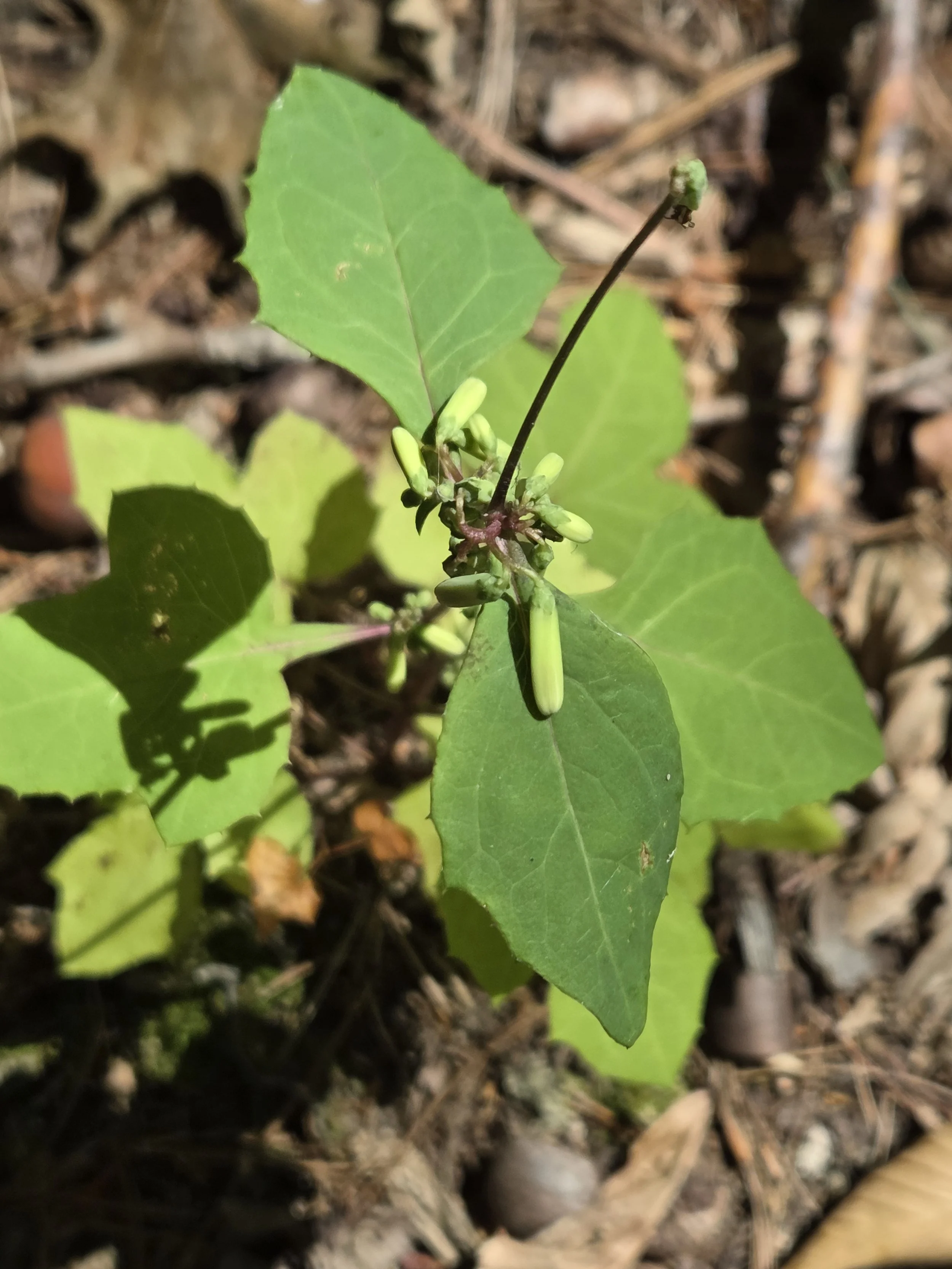


Looking—and Listening
Not every discovery happens in front of a camera. While walking the trail, the team has also been listening and has recorded an impressive variety of birds, including the Pileated Woodpecker, Tufted Titmouse, Barred Owl, Red-eyed Vireo, Black-capped Chickadee, Broad-winged Hawk, White-breasted Nuthatch, Downy Woodpecker, Blue Jay, Mourning Dove, Yellow-bellied Sapsucker, Ovenbird, and Veery.
A distant Scarlet Tanager was another welcome sighting, along with a Wild Turkey, one of New Hampshire’s remarkable wildlife conservation success stories.
What Comes Next?
Several wildlife cameras have recently been repositioned to provide a broader view of how animals move between the different habitats found across the property. As summer gives way to fall, the landscape will change again. Birds will move through, plants will set seed, the brook will rise and fall, and wildlife will adjust its movements with the season.
The cameras will continue to record some of those changes, and we look forward to sharing what they reveal in the next chapter of Life Along the Dora N. Spalding Trail.
Wildlife monitoring, surveys, and observations conducted by Access Conservation for the Monadnock Garden Club.
Jaime McGuigan (she/her/hers)
Founder and Board Chair
Explore Together. Discover More
Hang out with us here and here
TSP-26-51213
Photos captured by Jennifer H. Campbell